Latest News

Black hole gravity distorts view


Nasa has simulated a visualization of a black hole. This new visualization of a black hole illustrates how its gravity distorts our view, warping its surroundings as if seen in a carnival mirror. The visualization simulates the appearance of a black hole where in falling matter has collected into a thin, hot structure called an accretion disk. The black hole’s extreme gravity skews light emitted by different regions of the disk, producing the misshapen appearance.

Bright knots constantly form and dissipate in the disk as magnetic fields wind and twist through the churning gas. Nearest the black hole, the gas orbits at close to the speed of light, while the outer portions spin a bit more slowly. This difference stretches and shears the bright knots, producing light and dark lanes in the disk.

Viewed from the side, the disk looks brighter on the left than it does on the right. Glowing gas on the left side of the disk moves toward us so fast that the effects of Einstein’s relativity give it a boost in brightness; the opposite happens on the right side, where gas moving away us becomes slightly dimmer. This asymmetry disappears when we see the disk exactly face on because, from that perspective, none of the material is moving along our line of sight.


Closest to the black hole, the gravitational light-bending becomes so excessive that we can see the underside of the disk as a bright ring of light seemingly outlining the black hole. This so-called “photon ring” is composed of multiple rings, which grow progressively fainter and thinner, from light that has circled the black hole two, three, or even more times before escaping to reach our eyes. Because the black hole modeled in this visualization is spherical, the photon ring looks nearly circular and identical from any viewing angle. Inside the photon ring is the black hole’s shadow, an area roughly twice the size of the event horizon — its point of no return.


"Simulations and movies like these really help us visualize what Einstein meant when he said that gravity warps the fabric of space and time,” explains Jeremy Schnittman, who generated these gorgeous images using custom software at NASA’s Goddard Space Flight Center in Greenbelt, Maryland. “Until very recently, these visualizations were limited to our imagination and computer programs. I never thought that it would be possible to see a real black hole." Yet on April 10, the Event Horizon Telescope team released the first-ever image of a black hole’s shadow using radio observations of the heart of the galaxy M87.


Astronomers Capture First Image of a Black Hole

An international collaboration presents paradigm-shifting observations of the gargantuan black hole at the heart of distant galaxy Messier 87

The Event Horizon Telescope (EHT) — a planet-scale array of eight ground-based radio telescopes forged through international collaboration — was designed to capture images of a black hole. Today, in coordinated press conferences across the globe, EHT researchers reveal that they have succeeded, unveiling the first direct visual evidence of a supermassive black hole and its shadow.

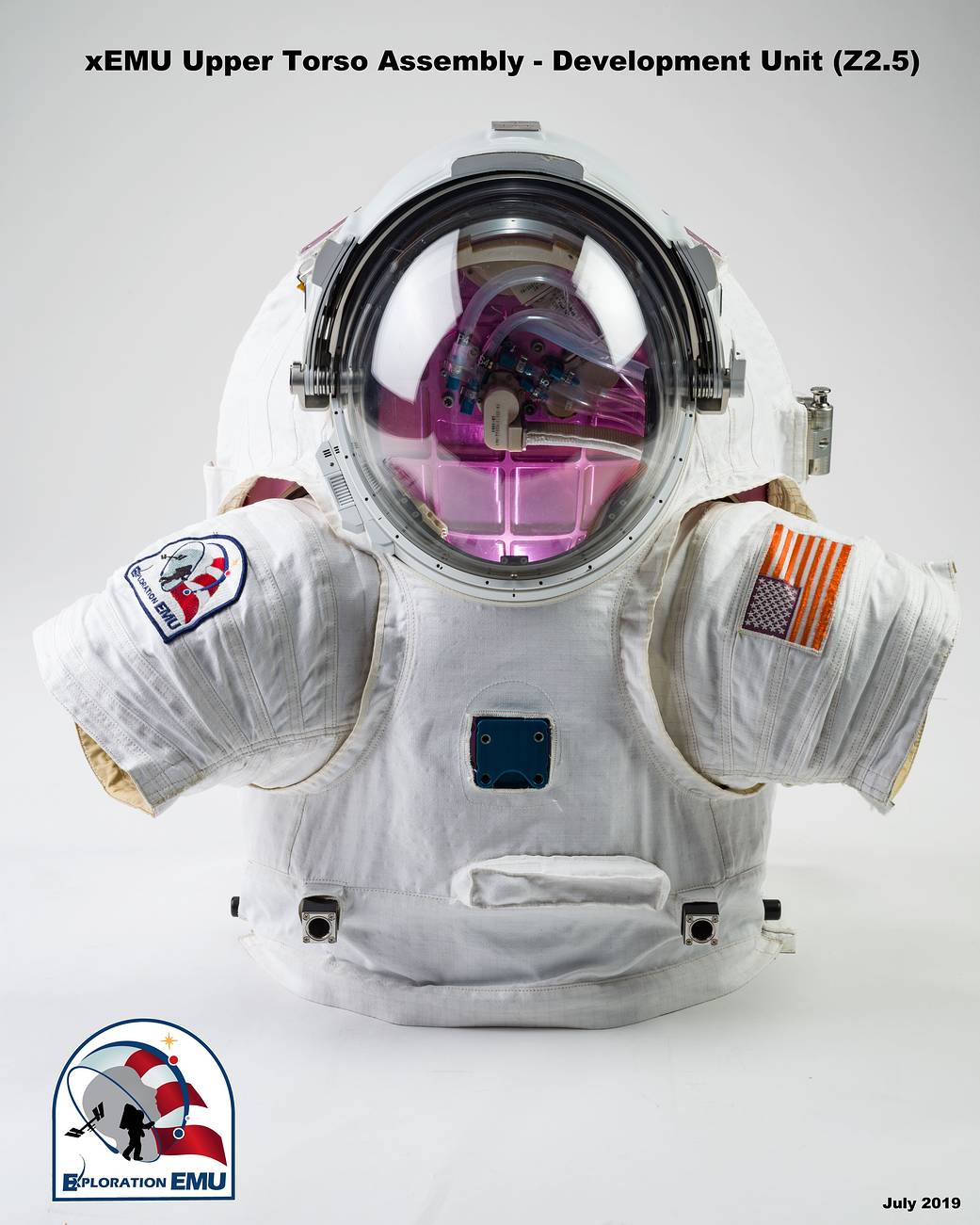


Lunar spacesuit prototypes are almost ready.


NASA is developing the Exploration Extravehicular Mobility Unit, or xEMU, as a spacesuit for astronauts on the moon as part of the Artemis program. 


After years of design and testing it is finally ready for space. Nasa recently announced that the xEMU prototype passed it's preliminary design review and will be tested in 2023.


NASA is developing a shape shifting robot for exploration


It only makes sense to create a space exploration robot that can tackle any type of terrain such as water, air or ground. That's exactly what we did when we designed G.R.I.F.O.N. 1 (Geological Research Instrument for Foraging and Observation in Nature) for the Quantum Enigma Comic Book and short film. Ours has two additional robots attached to it that can separate and float on water like an amphibious vehicle and it's also equipped with an aerial flying drone for reconnaissance. Ours is roughly a functional remote controlled prop, but Nasa is going all in.

The revolutionary concept called Shapeshifter is part drone, part boat, part all-terrain vehicle, and part submarine.

NASA 360 takes a look at the NASA Innovative Advanced Concept (NIAC) known as Shapeshifter. Researched by a team of engineers at NASA JPL the Shapeshifter concept is a flying amphibious robot that could one day be used to explore the treacherous terrains of distant worlds.

Check out the video below.


China's Lunar Rover Found Gel Like Substance on the Dark Side of the Moon


Yes, you read that correctly. Because of all of the other crazy news around the world this week, this headline didn't really get much coverage. Here's an excerpt from the article by Andrew Jones from Live Science.

"China's Chang'e-4 lunar rover has discovered an unusually colored, 'gel-like' substance during its exploration activities on the far side of the moon."

You can read the entire article here:


What I find most interesting about this, is that their theory for the substance is melted glass from a meteorite strike. Now you tell me, does glass look like a gel like substance? Maybe when it's hot, but this surely is not. Sounds like an X-Files episode.

Our Galaxy's Black Hole Has Emitted a Mysterious Flare


The supermassive black hole at the heart of the Milky Way, Sagittarius A*, is relatively quiet. It's not an active nucleus, spewing light and heat into the space around it, until now.

Astronomer Tuan Do and his team took observations of the galactic center using the WM Keck Observatory in Hawaii over four nights earlier this year. The strange flashes were captured in timelapse earlier this year, two hours condensed down to a few seconds.

Check out the video below.


What does it mean?

Send Your Name To Mars in 2020


In Celebration of the 50 year anniversary since humans walked on the moon, I am posting this so you can add your name to the Mars Rover Mission in 2020 and send your name to Mars.

Although it will be years before the first humans set foot on Mars, NASA is giving the public an opportunity to send their names — stenciled on chips — to the Red Planet with NASA's Mars 2020 rover, which represents the initial leg of humanity’s first round trip to another planet. The rover is scheduled to launch as early as July 2020, with the spacecraft expected to touch down on Mars in February 2021. Click below to add your name.

Get your ass to Mars!


NASA Climbing Robot Scales Cliffs and Looks for Life


Lemur is a test exploratory robot that can scale cliffs such as the ones on Mars and possibly the Moon. Check out the video below of some testing. Pay attention to those cool grasping feet.

Here is the official JPL/Nasa info on this bot:

Robots can land on the Moon and drive on Mars, but what about the places they can't reach? Designed by engineers as NASA's Jet Propulsion Laboratory in Pasadena, California, a four-limbed robot named LEMUR (Limbed Excursion Mechanical Utility Robot) can scale rock walls, gripping with hundreds of tiny fishhooks in each of its 16 fingers and using artificial intelligence to find its way around obstacles. In its last field test in Death Valley, California, in early 2019, LEMUR chose a route up a cliff, scanning the rock for ancient fossils from the sea that once filled the area. 


The LEMUR project has since concluded, but it helped lead to a new generation of walking, climbing and crawling robots. In future missions to Mars or icy moons, robots with AI and climbing technology derived from LEMUR could discover similar signs of life. Those robots are being developed now, honing technology that may one day be part of future missions to distant worlds.